

Why mayn't we have pockets?
On Gwen Raverat (1885-1957), a major artist in a minor field

Your support makes everything possible. Thank you!
Precious beings,
As you know, I’ve recently become just a tiny bit obsessed with relief printing. I’d always wanted to try my hand at this artform and so, early in January, my wife and I finally decided to have a lino-cutting art date. Things went well (we had a wonderful time, and made lots of terrible art!), and led to my personal challenge, which I’ve called Mostly Birds: a semi-daily project during which I’m creating 30 lil eraser stamps, each a response to the natural world/our home on Bundjalung country (I’ve been posting most of these on Substack Notes).
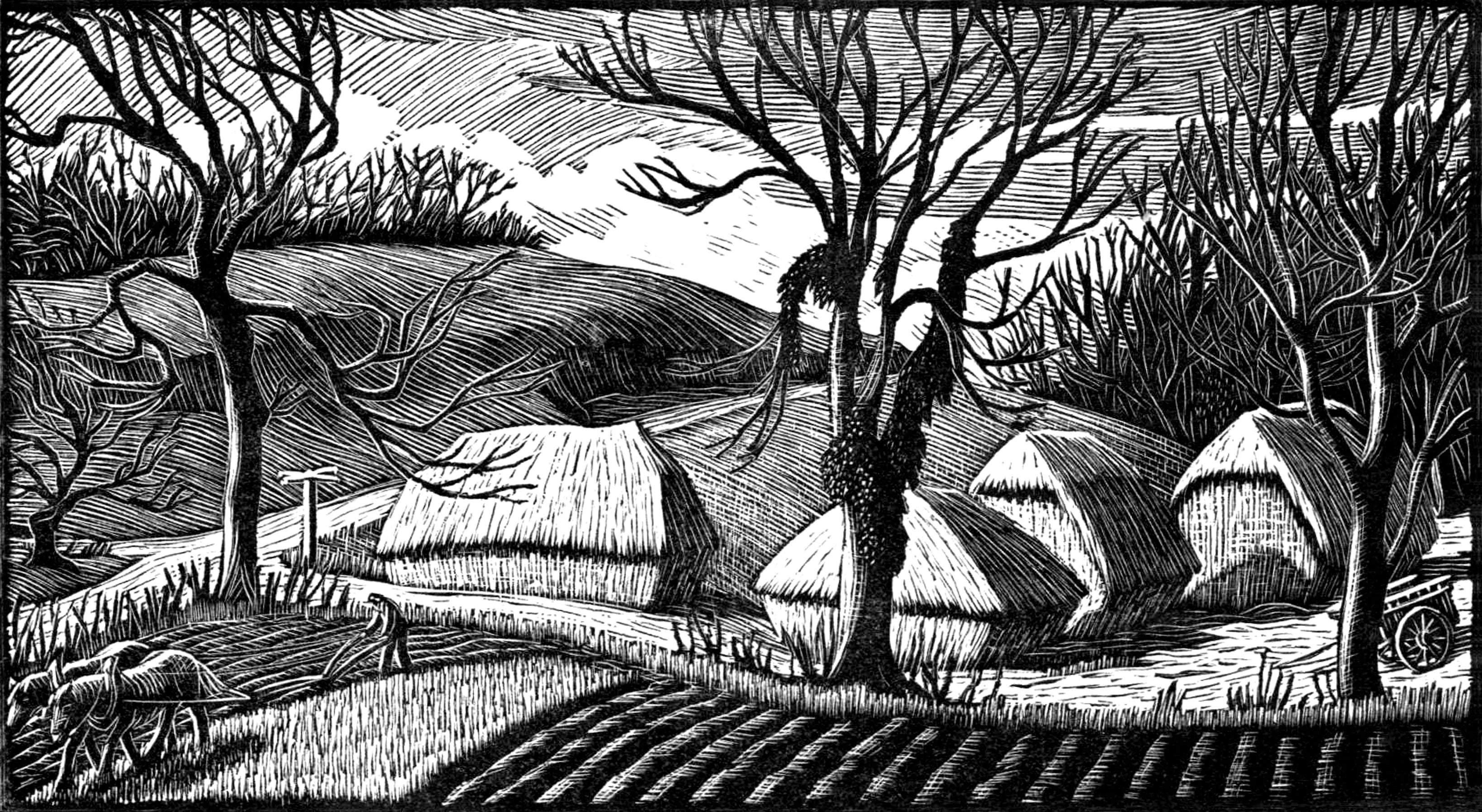
Alongside this practical play/exploration, I’ve been enjoying some gentle, exploratory research into relief artworks and artists, which brings me to the subject of today’s newsletter: Gwendolyn Mary Raverat1, née Darwin (one of Charles Darwin’s granddaughters), who was a major figure in the British resuscitation of relief printing in the modern period and, according to Joanna Selborne, ‘a major artist in a minor field’.
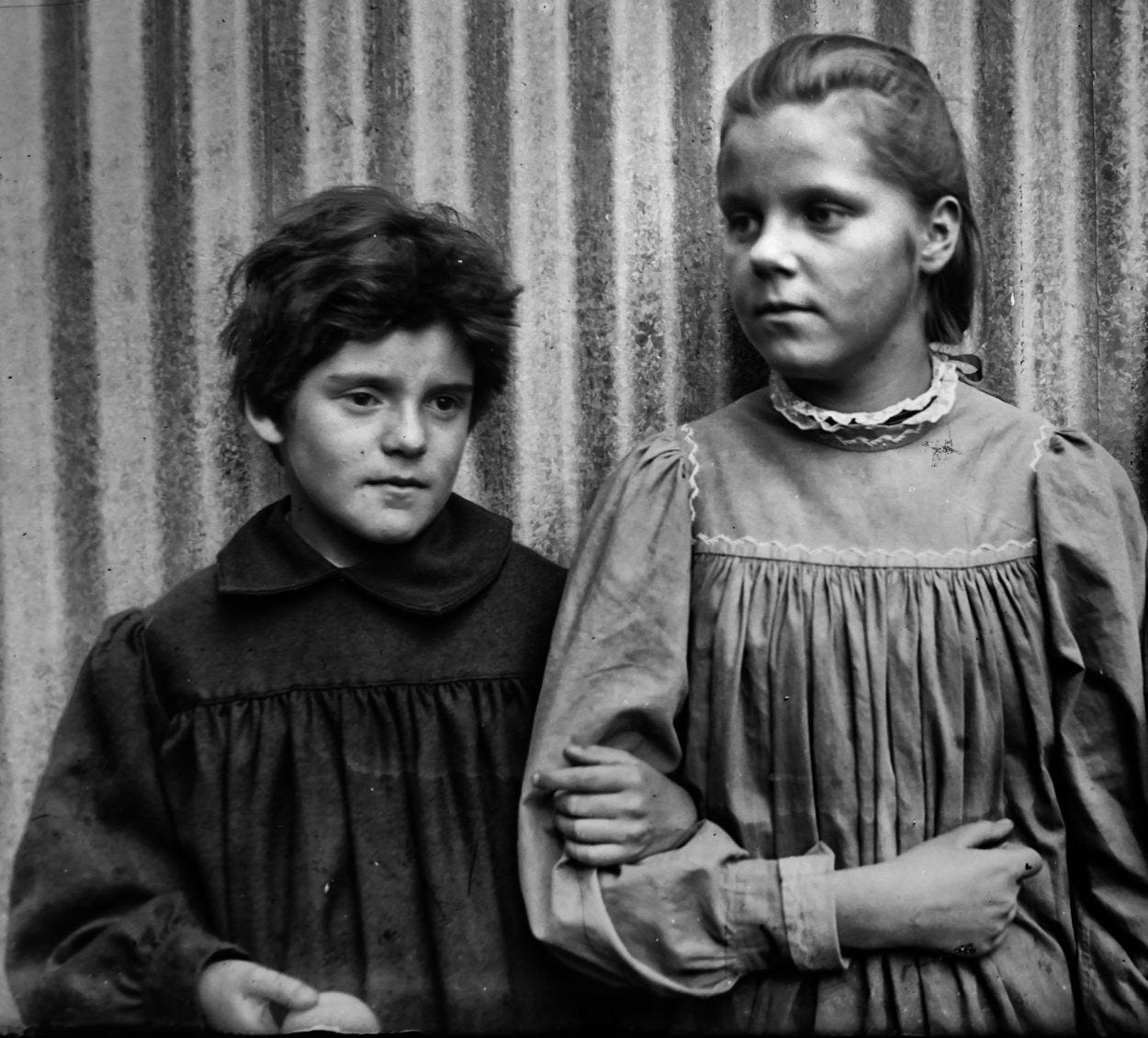
Gwen attended the Slade School in 1908, but Simon Brett (one of her biographers) writes that she taught herself to engrave while she was there. She had a long fascination with the form: as a child, she had kept prints of Rembrandt’s engravings under her pillow. According to Brett she was a major and important artist, though her art and influence have been largely forgotten. Brett writes:
The regard she turned upon reality—upon landscape, figures in landscape, sometimes the incidents of story—sees all things together. Her vision is to do with seeing (that is not as obvious as it sounds). In this primacy of seeing, interpretation, expression, storytelling or imagination are gathered up into statement: this is how it is. The ease with which the figures lie, at one with their being and the world around them, thereby stands comparison with the etchings of Rembrandt that were her childhood pillow-book, or with the idylls of Titian or Seurat.
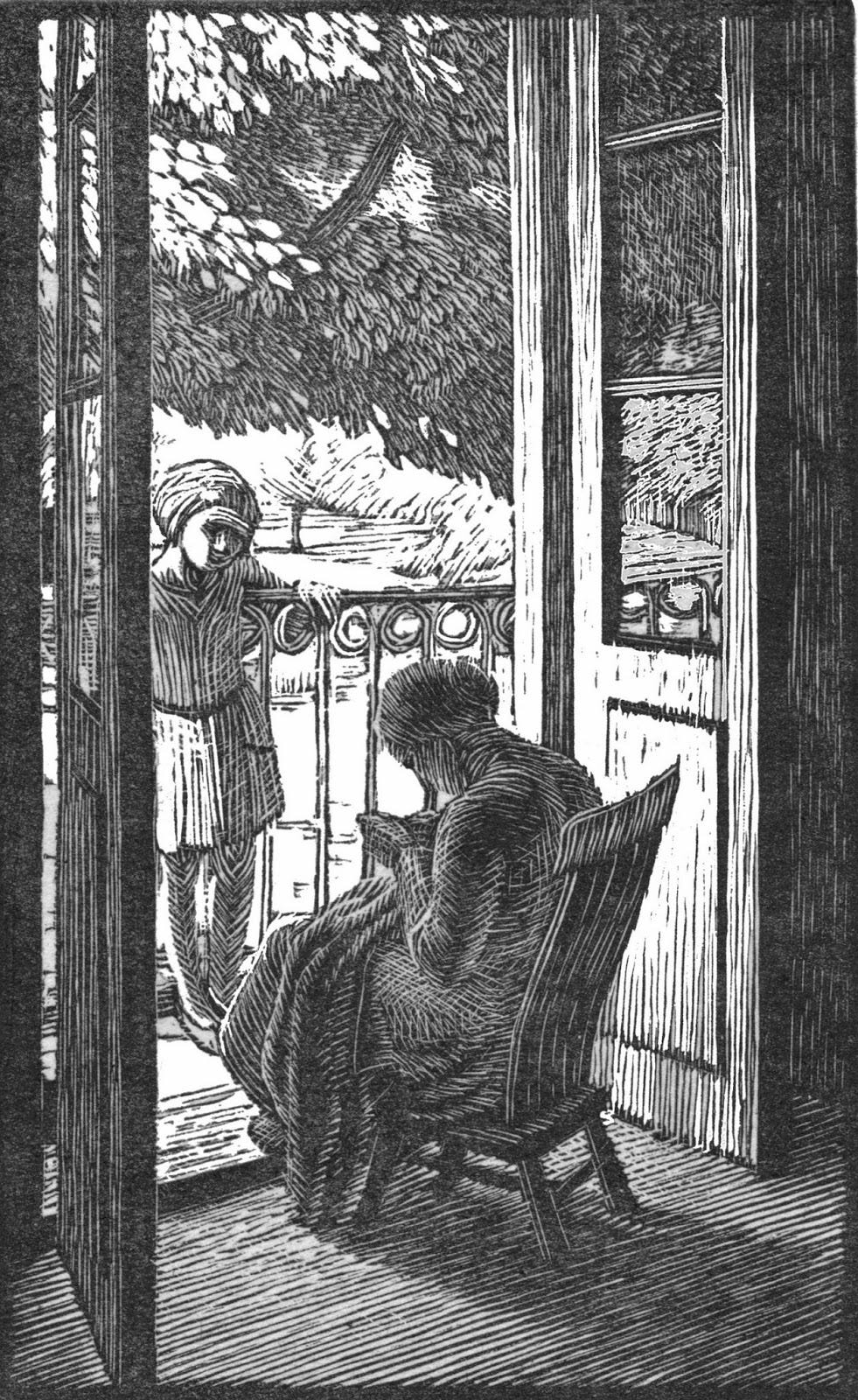
Gwen was a founding member of the Society of Wood Engravers, and one of the first wood engravers to be recognised as ‘modern’. Her relief print style is quite painterly, and is influenced by the Impressionists and Post-impressionists, and especially the work of Lucien Pissarro.
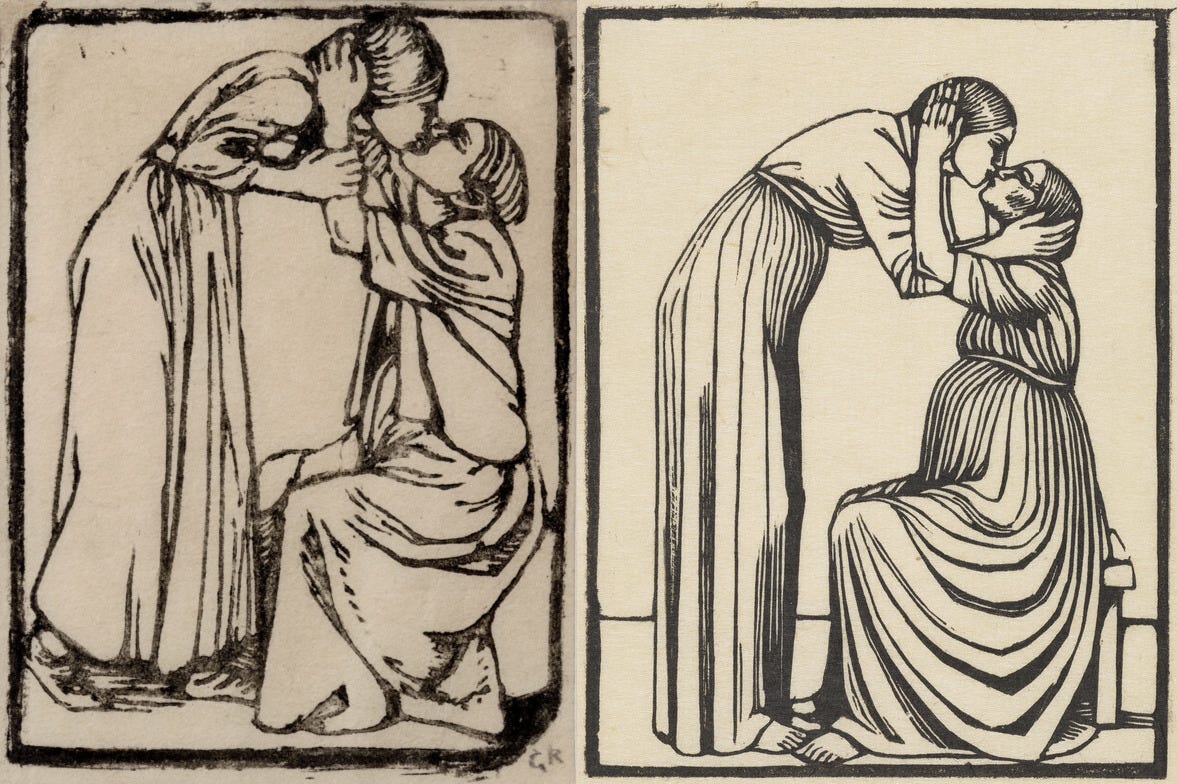
One of her early works was published in The Open Window in 1911. It is an illustration for the ballad of Lord Thomas and Fair Annet (sometimes known as Lord Thomas and Fair Eleanor) [Roud 4, Childe 73].
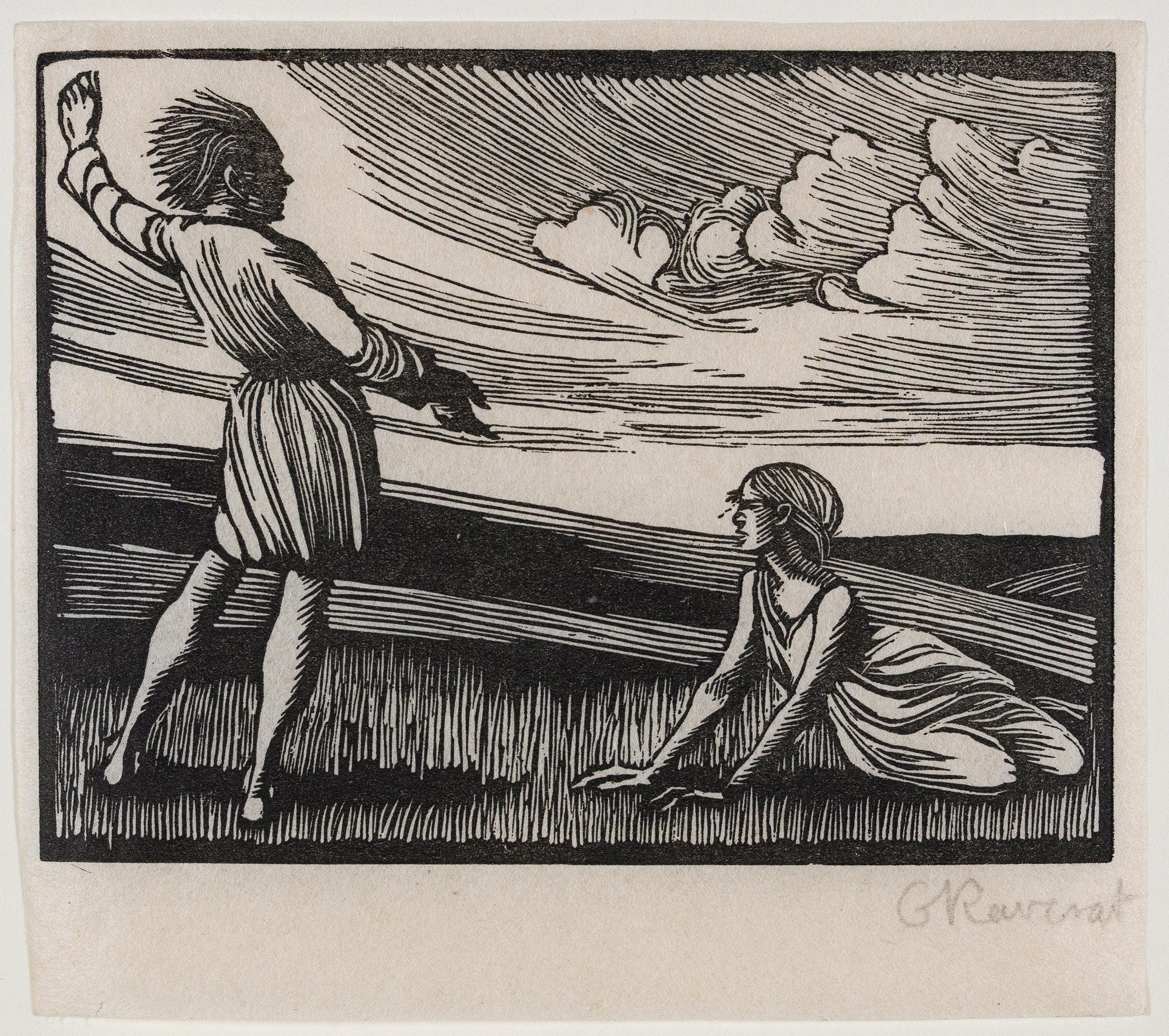
Gwen was a significant and influential figure in the revival of wood engraving and relief printing in Britain during the early twentieth century. As well as being a founding member of the Society of Wood Engravers, she exhibited in every single one of their annual exhibitions between 1920 and 1940, exhibiting over 120 engravings. She is the subject of the first book devoted to a modern wood engraver, Herbert Furst’s Gwendolen Raverat (first published in 1920).
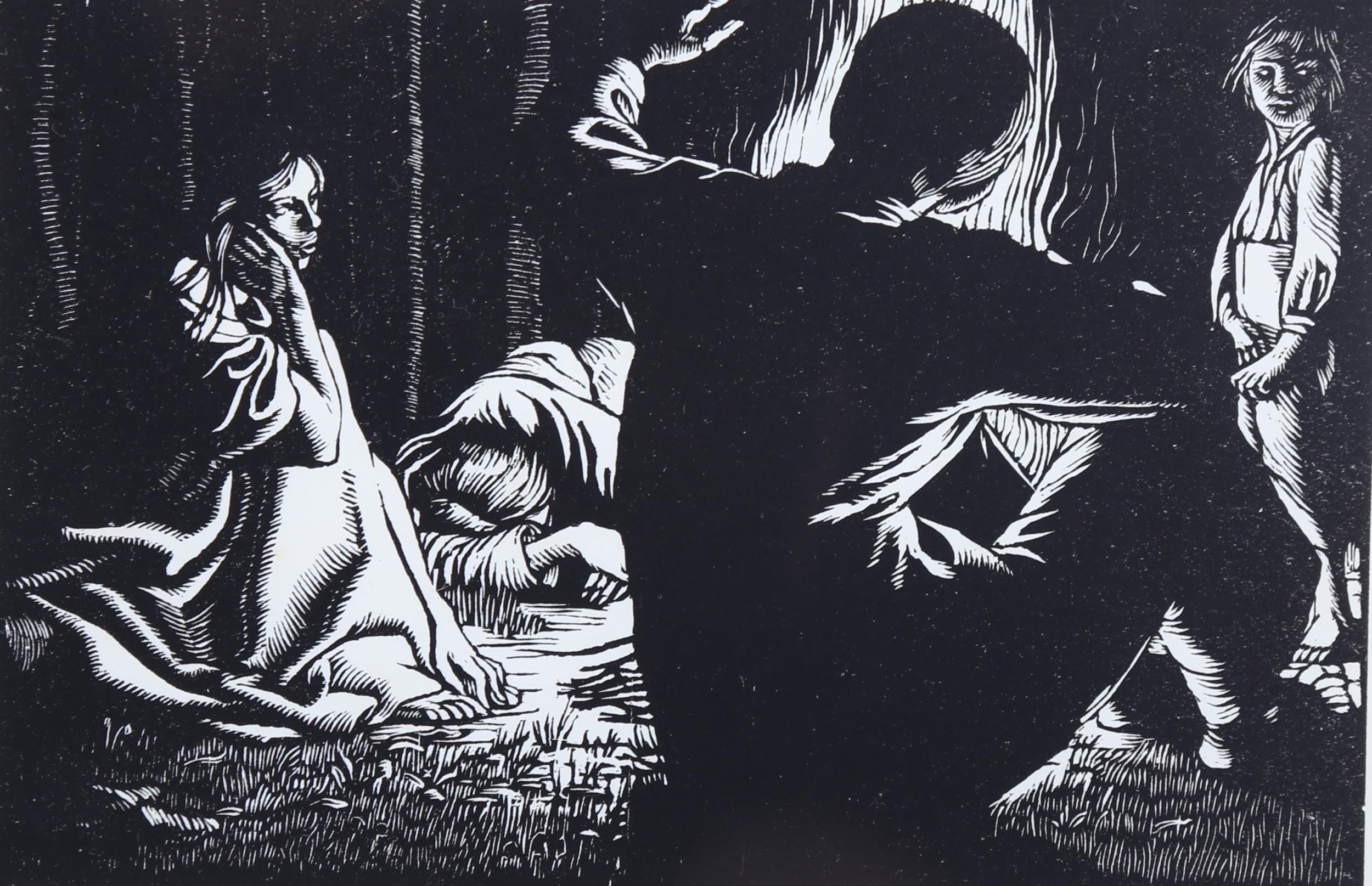
Gwen had to give up wood engraving after a stroke in 1951, when she was in her sixties. She passed away a few years later, in 1957.
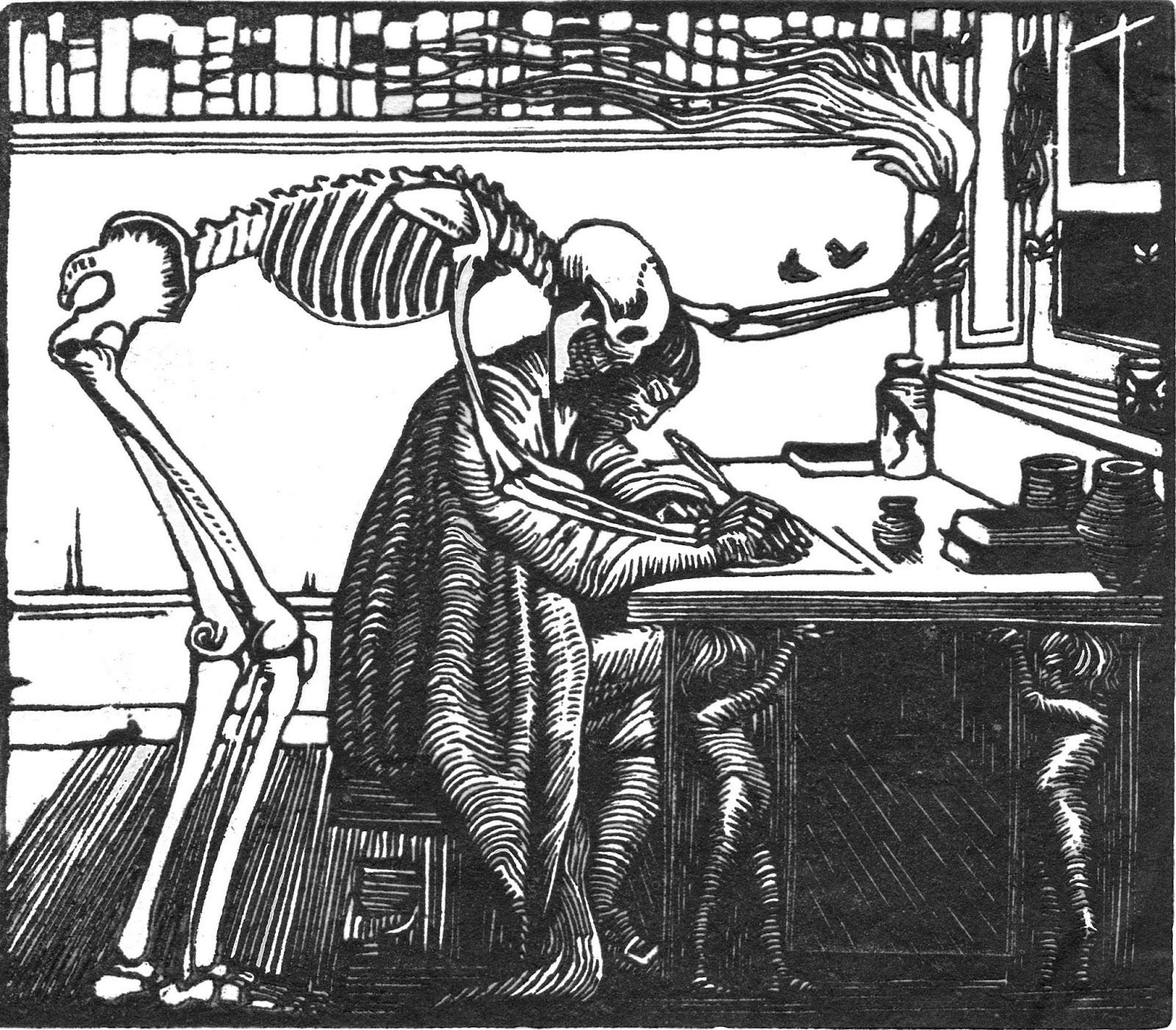
Gwen lived a rich, varied, creative and adventurous life. She grew up among bohemians and intellectuals and artists, and while much of her art is concerned with religious narratives and themes, she was a free thinker, and something of a libertine.
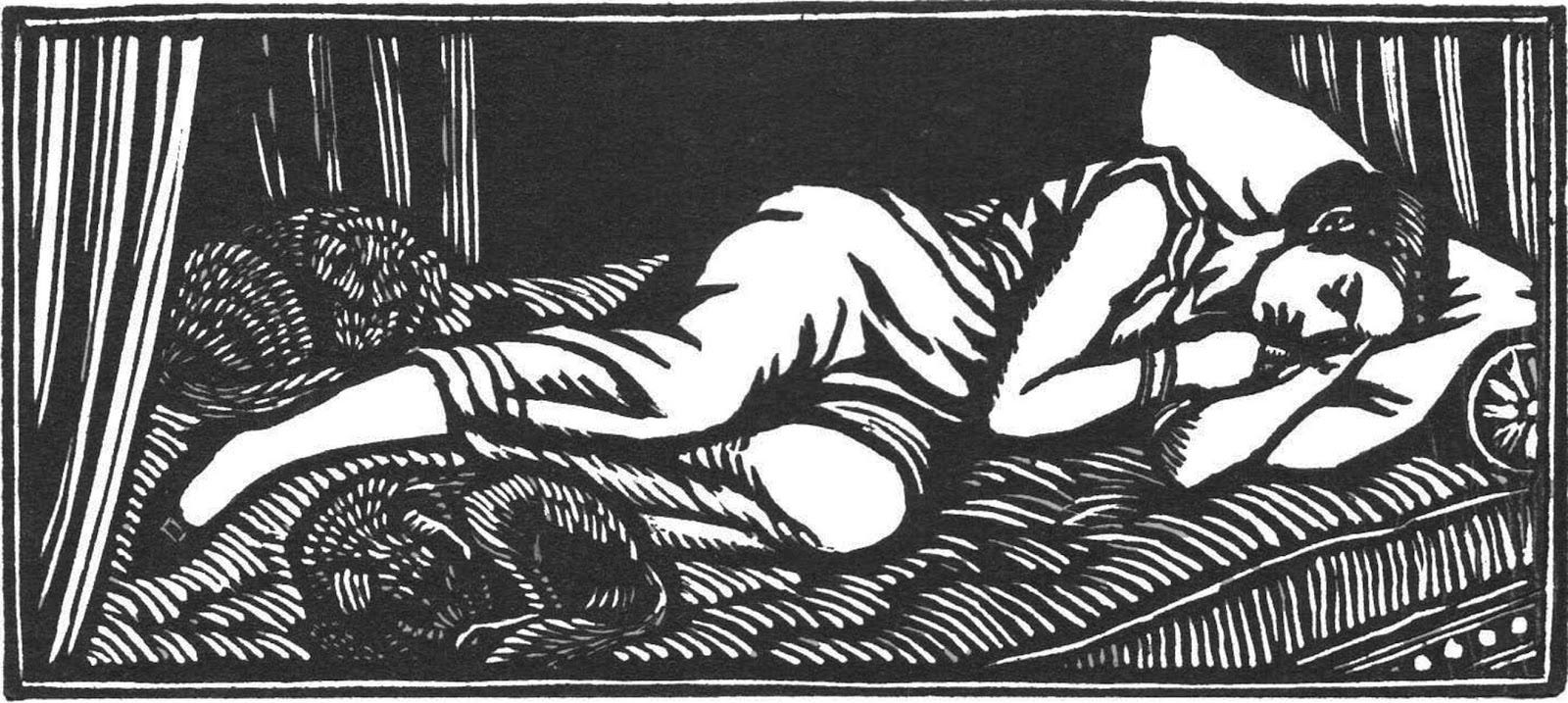
As a young woman, Gwen married the son of a vegetarian French silk merchant who was friends with Gide and Valéry, became one of Rupert Brooke’s neo-Pagans2, designed the costumes and sets for Vaughan Williams’s ballet, Job. For a while, she also tried her hand at writing a novel. According to William Pryor, one of Gwen’s descendants, ‘It wasn’t very good, but does convey [a] bohemian spirit’. Here’s a delightful little extract from her unpublished narrative:
For a time we were very decadent. We used to loll in armchairs and talk wearily about Art and Suicide and the Sex Problem. We used to discuss the ridiculous superstitions about God and Religion; the absurd prejudices of patriotism and decency; the grotesque encumbrances called parents. We were very, very old and we knew all about everything; but we often forgot our age and omniscience and played the fool like anyone else.
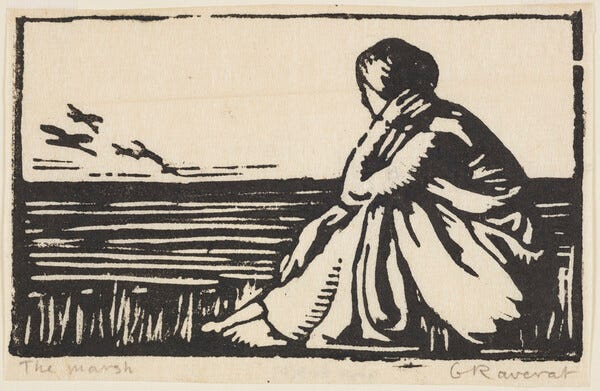
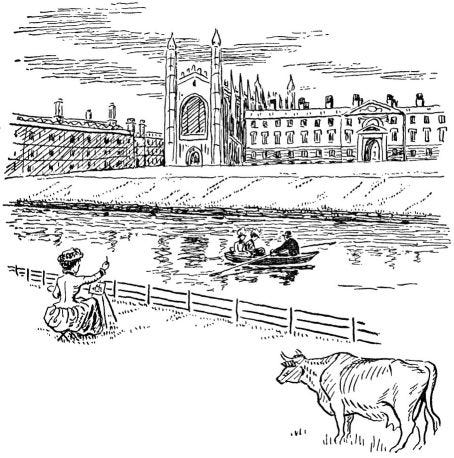
Rather delightfully, after she was forced to give up wood carving for less physically taxing arts practices, Gwen wrote a memoir of her childhood called Period Piece (first published in 1952), which was enormously popular. The book is illustrated by her, and includes many portraits of her extended family, and of the area around Cambridge where it takes place. It includes one of my favourite small diatribes on the Very Important Issue of (Women’s) Pockets (and what is kept inside them!).
After writing so bitterly about the clothes of my youth, I must now be just, and admit that they had one great advantage over the clothes we wear nowadays. We had Pockets. What lovely hoards I kept in them: always pencils and india-rubbers and a small sketch-book and a very large pocket-knife; besides string, nails, horse-chestnuts, lumps of sugar, bits of bread-and-butter, a pair of scissors, and many other useful objects. Sometimes even a handkerchief. For a year or two I also carried about a small book of Rembrandt’s etchings, for purposes of worship. Why mayn’t we have Pockets? Who forbids it? We have got Woman’s Suffrage, but why must we still always be inferior to Men?
References
Brett, Simon, 1989, The wood engravings of Gwen Raverat, Silent Books.
Brett, Simon, 2006, ‘Artist of Earth and Sky’, Slightly Foxed, Issue 9, 1 March.
Pryor, William, 2013, ‘The Launch of Raverat.com’ at Gwen Raverat, 12 March.
Raverat, Gwen, 1952, Period Piece, Faber & Faber, London. (Available online, including illustrations, here)
Selborne, Joanna and Lindsay Newman, 2003, Gwen Raverat: wood engraver, Oak Knoll Press.
Spalding, Frances, 2010, Gwen Raverat: Friends, family, and affections, Vintage.
Welcome to Bird + Bone. I’m so very glad you’re here. During 2026, I’ll be posting once a month or more, sharing everything I know about writing, and visual art, from hints and tips to biographies and critiques.
I’m an award-winning writer and editor, and a former creative arts academic. Most of my posts are about writing and visual arts, but I also write about other things that fascinate me, and which I hope will also inspire and interest you: especially women and queers, history, folklore, and the natural world.
If you can afford to do so, I would be enormously grateful if you sponsored my writing by taking up a paid subscription or using the link above to buy me a pencil. But, if that’s not your thing, if you could let me know you enjoyed or appreciated my work by commenting, liking, or sharing I’d be enormously grateful.
Thank you for reading!
The final ‘t’ is silent, in case you wish to pronounce her name correctly in your head!
So named by Virginia Woolf, the neo-pagans were strongly connected to the Bloomsbury group. They rejected their parents’ and elders’ Edwardian conventionality for a romanticised, ‘pagan’ lifestyle emphasising connection to and admiration of the natural world, literature and creativity, and unconventional relationships.
I’m stunned by this artist and her works. Jaw dropping! The woman in the chair, with the child on the balcony just blows my mind. So many ways to interpret her being rendered in those scratches! I will return to this essay again and again. Big thanks for your research, writing, and wonderful energy 🙏🏼
These are really lovely! Thanking you for sharing - so many women artists have been lost to time. Probably due to the lack of pockets to carry devotionals of their work!